If you’re wondering how to choose the best shed for a home office, let me just say this: it seems simple… until you’re standing in a gravel lot, staring at rows and rows of buildings, not sure what size or even what type of structure you actually need. We went into this thinking we’d pick something cute, have it dropped in the backyard, and call it a day.
Instead, choosing the right shed turned into a full-blown decision spiral involving budgets, measurements, and at least one moment where we questioned all of our life choices. So before you make the same mistakes we almost did, here’s exactly what to look for when buying a shed for a home office—plus a few things no one tells you until it’s too late.
Table of Contents
What to Look for When Choosing the Best Shed for a Home Office
Choosing a shed for a home office isn’t just about picking the cutest one on the lot (ask me how I know). You’re not buying a place to store holiday decorations—you’re creating a space you’ll actually want to work in, which means comfort, functionality, and a little bit of foresight matter more than curb just appeal.
Before you commit, there are a few key things to think through: size (and then add a little more), natural light, insulation potential, and whether your future self will regret not upgrading something while you had the chance. We learned very quickly that not all sheds are created equal—and the cheapest option can get expensive fast if you have to retrofit everything later.
Size Matters More Than You Think
When choosing a shed for a home office, size is one of those things you think you’ve nailed… until you start mentally placing a desk, a chair, maybe a plant if you’re feeling ambitious—and suddenly you’re working in what feels like a stylish closet. We originally thought, “We don’t need that much space,” which is exactly what people say right before they regret everything.
Here’s the reality: once you add insulation, drywall (or paneling), and actual furniture, your usable space shrinks fast. If you’re on the fence, go bigger. Future you—the one trying to stand up without hitting a wall—will be very grateful.
Windows, Light & Not Feeling Like a Goblin
Natural light is not optional unless your goal is to slowly become a cave creature who forgets what time of day it is. When looking at sheds, pay close attention to window placement, size, and how much light the structure actually lets in.
Some sheds look bright and airy on the lot… and then you get them home and realize they feel more like a storage unit with commitment issues. Adding windows later is possible, but it’s not always cheap or easy.
If you plan to work in this space daily, prioritize:
- At least one or two windows (depending on the size of your shed)
- Cross-lighting if possible
- A door(s) with a window (bonus points – which we unfortunately did not get and are working to upgrade to)
Trust me, your mood (and your Zoom lighting) will thank you.
Flooring, Structure & “Is This Even Level?”
This is the part we definitely didn’t think enough about at first.
Not all prebuilt sheds are created equal when it comes to flooring and structural integrity. Some come with solid, thick flooring that can handle furniture and daily use. Others… feel like they were designed for a rake and a box of Christmas decorations.
Things to look for:
- Pressure-treated floor joists
- Thick plywood or LP flooring
- Reinforced framing
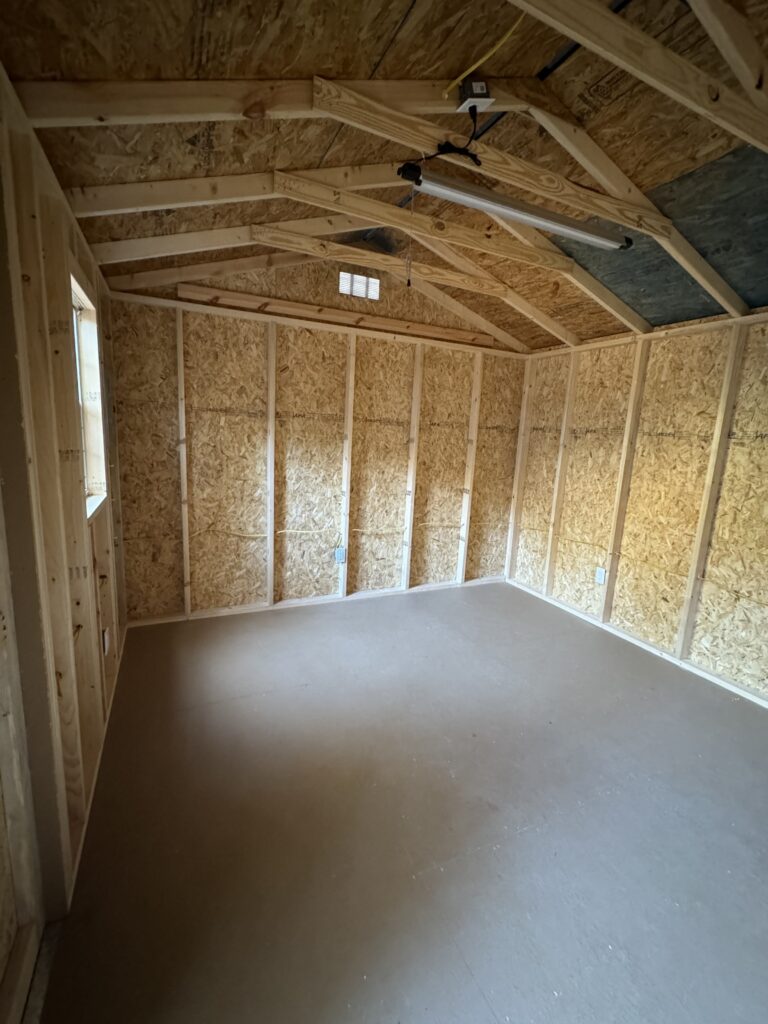
Also—and I cannot stress this enough—make sure your shed is placed on a properly leveled base. A slightly uneven shed might not seem like a big deal until your desk chair slowly rolls away from you mid-Zoom call like it’s trying to escape. Fortunately, the company that we purchased our shed from also delivered it and before they even set it in place, they made sure everything was level and the cinderblocks were in their proper placement.
Prebuilt vs Custom: What We Chose (and Why)
When deciding between a prebuilt shed for a home office and a custom-built option, it mostly comes down to budget, timeline, and how much decision-making energy you have left.
We went with a prebuilt shed, mainly because:
- It was faster
- It was more budget-friendly
- We could physically see what we were getting
Custom sheds are great if you want total control, but they also come with a higher price tag and more choices. We even checked into a company from up North called Bunkie Life, which offers small cabin kits that they say can be built in a weekend (though I’m willing to bet we could turn it into a much longer process, albeit not by our choosing). Although they were super cute and we liked the idea of customizing it to our needs, the price tag for a large enough one to accommodate the both of us was out of our price range.
For most DIYers, a good-quality prebuilt shed is the sweet spot. You can always upgrade and customize the interior later (which, spoiler alert: you will).
Features Worth Paying Extra For
This is where you can save yourself a lot of time, money, and future frustration.
There are a few upgrades that are absolutely worth considering upfront:
- Extra height (seriously, don’t skip this). Some of the options have sloped ceilings, which really limits headroom
- More or larger windows
- Better siding (LP SmartSide, etc.)
- Upgraded doors (especially if you’re moving furniture in)
- Prewired electrical. It cost us about $400 for the company to prewire everything for us and place outlets where we needed them. It was well worth the money!
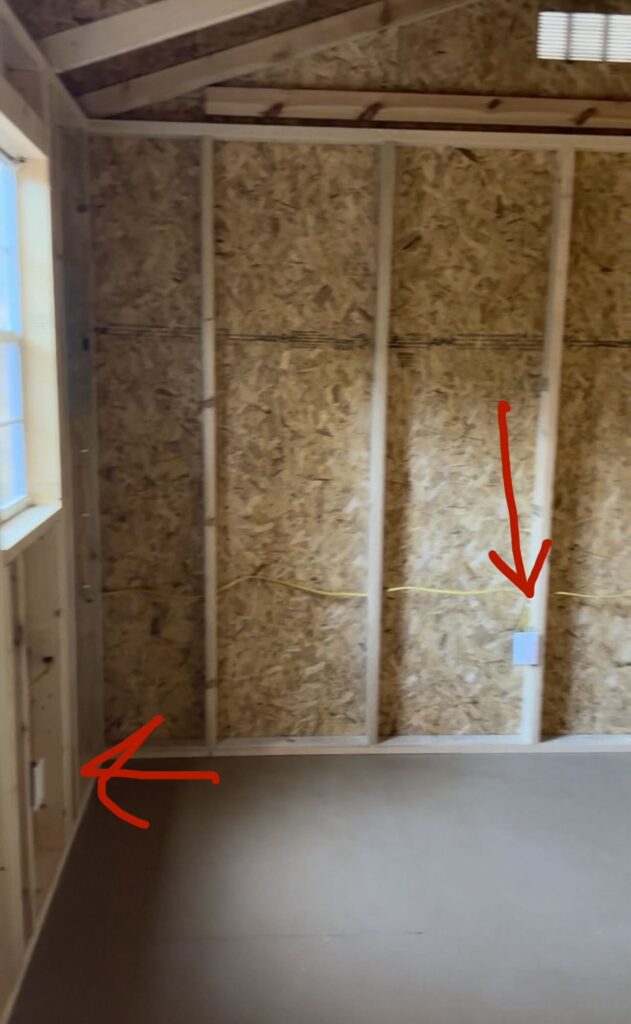
It’s tempting to go with the cheapest option and “figure it out later,” but some features are much easier (and cheaper) to get from the start than to retrofit.
We tried to strike a balance between budget and function… and let’s just say there are a couple of things we definitely would upgrade if we could go back.
Choosing the best shed for a home office is equal parts planning, guessing, and mild overconfidence. We didn’t get everything right—but we learned a lot along the way. If you’re still not sure if it’s the right fit for your office needs, you can read about why we chose the shed-to-office route in in this post.
To make it a little easier for you, we created a free downloadable checklist to help you avoid costly mistakes and ensure you select the perfect shed for your home office! Happy building!
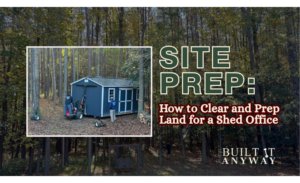
Next up: clearing and prepping the land… which sounds straightforward until you’re knee-deep in dirt, roots, and poor decisions.